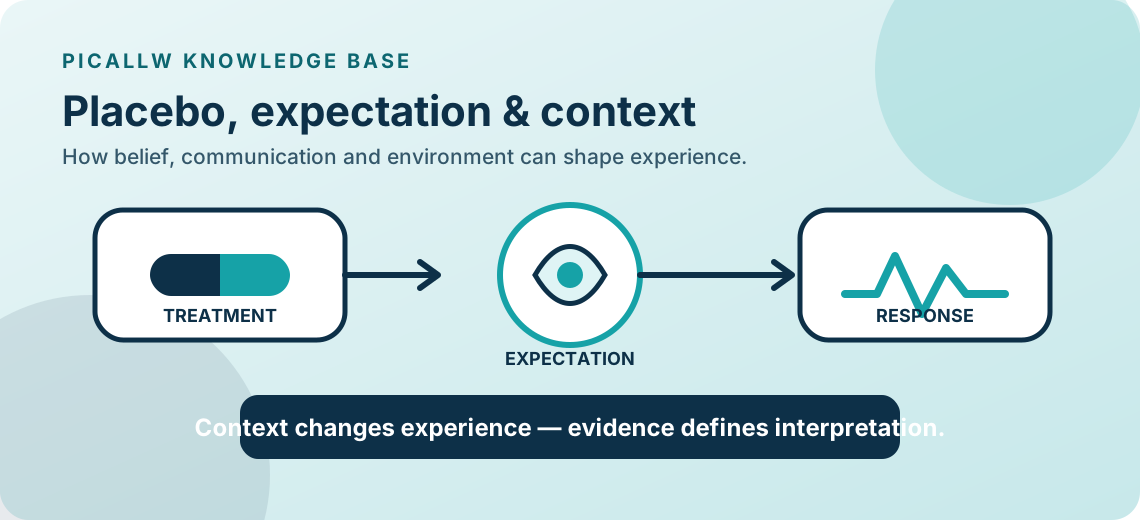
Placebo is not “just imagination”
The placebo effect does not mean that a person invents a problem. It means that expectation, relationship, ritual and context can influence symptom experience and some physiological responses. The magnitude varies by condition, person and measurement method.
The context of care
Words, safety, environment, previous experience and trust all shape the experience. Even a genuinely effective therapy operates within such a context. Placebo is therefore not necessarily a competitor to treatment; it is part of the overall care experience.
Nocebo and negative expectation
Negative expectations can increase perceived pain, side effects or anxiety. Communication matters. Information should be honest but delivered in a way that does not create unnecessary fear.
Why control groups are needed
Because expectations can alter reports and part of the response, research uses comparison conditions and blinding. This helps separate the specific effect of an intervention from context, natural change and statistical variation.
Ethical use of this knowledge
Understanding expectation does not justify deception. A better path is transparent communication, realistic hope and supportive rituals without false claims. People can benefit from structure and attention without being sold an unsupported scientific explanation.
Putting the idea into practice
The greatest value comes from turning an idea into a small, testable process. Define the goal and baseline first, change only what can be observed, and record the result. In technical work this means measurements, logs and repeatable tests; in personal practices it means a clear intention, a time frame, and separating subjective impressions from measurable change.
It is equally important to distinguish possibility from evidence. An interesting hypothesis can justify exploration, but it is not yet an established fact. PICALLW therefore favours transparency where technology, human experience and less-established approaches meet: what is well supported by research, what is practical experience, and what should still be treated as experimental.