Microphone & Cymatics
Use the microphone or a recording to excite a simulated circular plate and observe frequency-dependent nodal patterns. The excitation position can be moved across the plate.
Cymatics, voice analysis and acoustic experimentation in one Android environment.
Voice Studio combines a physically inspired vibrating-plate model, frequency generation, recordings and measurable acoustic voice features. It is designed as an experimental tool for observing sound — not as a medical diagnostic system.
Public APK releases are published only on the official PICALLW Downloads page.
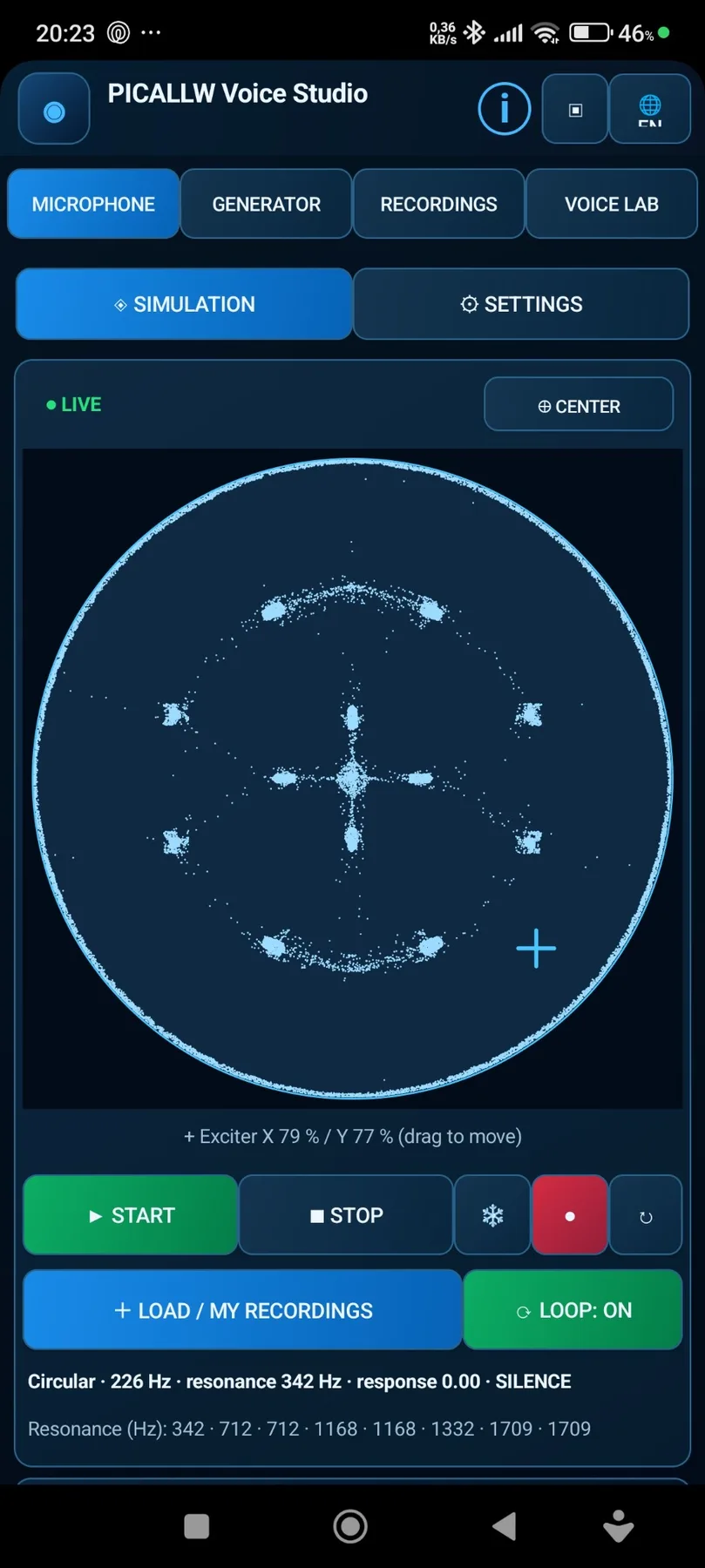
The four main tabs separate live sound, generated signals, recordings and deeper acoustic analysis. The cymatics view is a model of a vibrating plate; the voice measurements come from the recorded audio signal.
Use the microphone or a recording to excite a simulated circular plate and observe frequency-dependent nodal patterns. The excitation position can be moved across the plate.
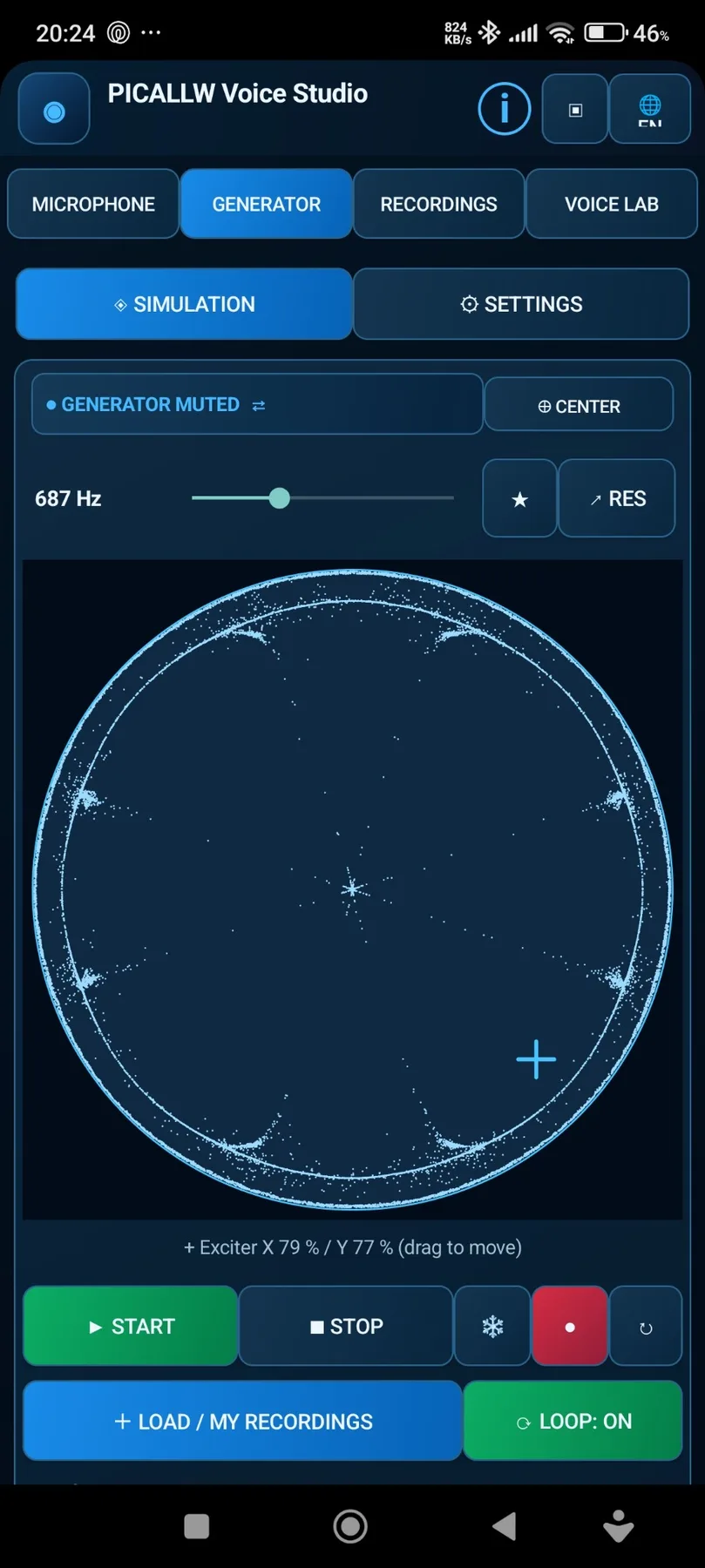
Generate tones, explore calculated resonances, save favourite frequencies and compare the model response with the actual audible signal.
Record, import, replay, loop, rename and manage audio samples. The same recording can be reused for visualisation and acoustic analysis.
Analyse pitch and stability, spectrum, approximate formants and MFCC features, with research-oriented estimates such as HNR, jitter, shimmer and CPP.
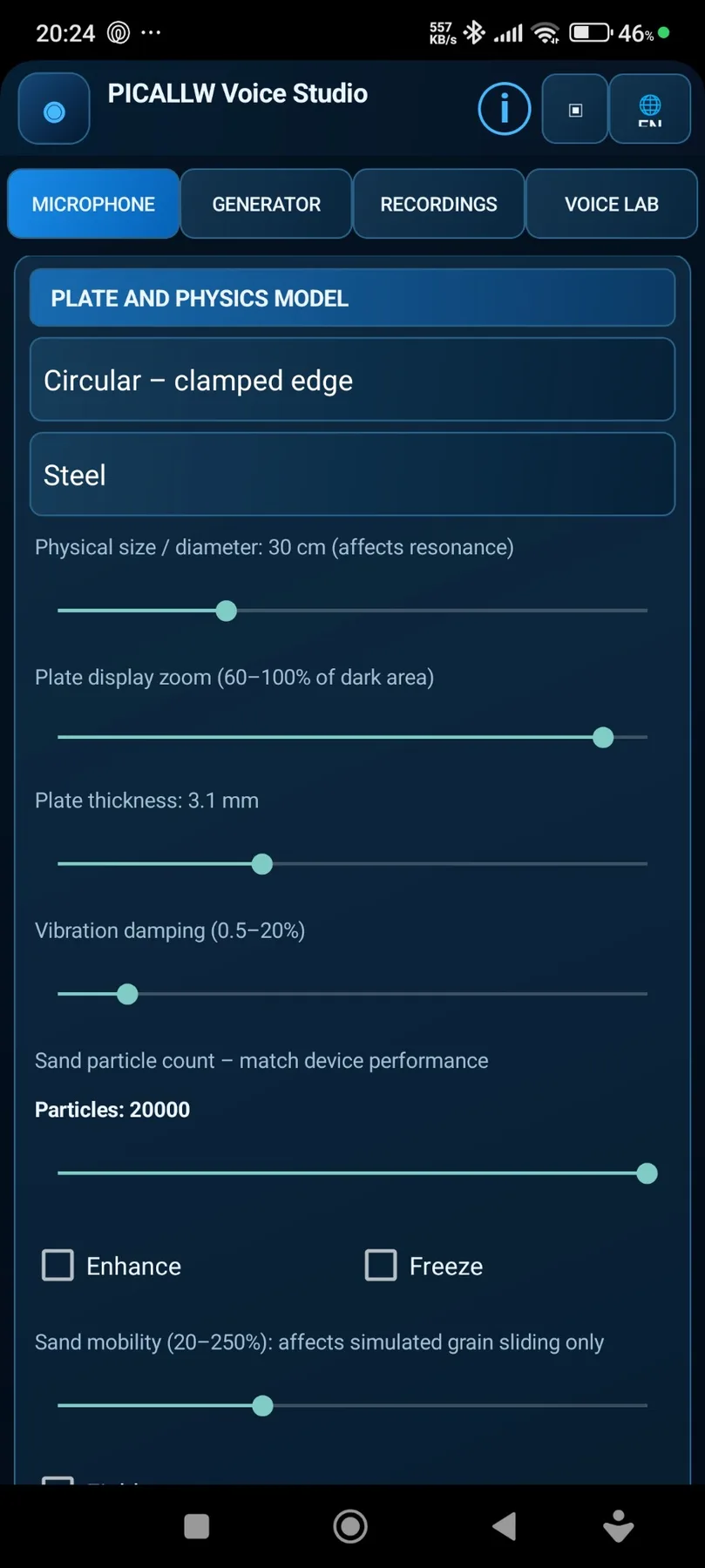
The plate model uses geometry, material-related settings, physical size, thickness, damping, excitation position and a finite set of resonant modes. Sand-like particles are then moved by a simplified simulation to make nodal structures visible.
This distinction matters: the displayed pattern is a model response. It is useful for experimentation and education, but it is not a direct measurement of a real Chladni plate.
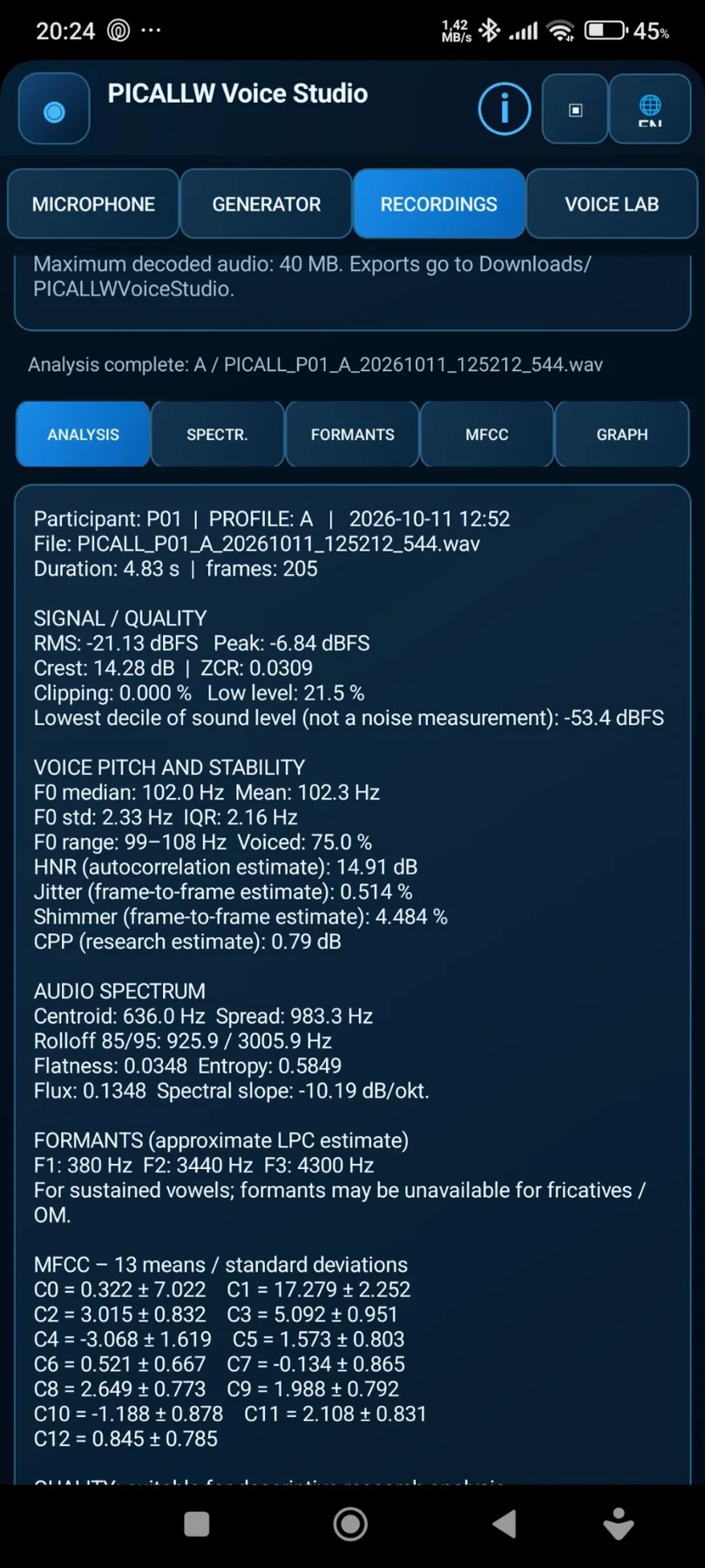
Voice Studio can calculate signal level, fundamental frequency, pitch variability, spectral descriptors, approximate LPC formants and MFCC statistics. Several voice-quality measures are also included as research estimates.
Diameter, thickness, damping, particle count and mobility affect the simulated response. Keeping these settings visible helps separate a model parameter from an observed property of the audio.
For repeatable voice work, the same principle applies: use the same microphone, distance, room, task and recording level whenever possible.
The microphone or imported file provides the actual sampled signal.
F0, spectrum, MFCC and other metrics are derived mathematically from that signal.
The plate response is simulated from selected geometry and physics parameters.
Possible links with HRV, GDV or other measurements require a controlled protocol and independent validation.
Use the official download page for public builds and release files. The project page and technical article will be updated as the application evolves.